The Great Equalizer, Reserved for the Already Equal: OpenAI's Astra for Law, Size-Based Access, & the Americans Who Have No Lawyer at All

Updated: Sep 28
By Erick S. Robinson
SEPTEMBER 25, 2026

NOTE: All references are hyperlinked within the text of the article. |
I. Bottom Line Up Front
On September 17, 2026, OpenAI released Astra for Law, a configuration of GPT-6 Astra built for legal work: the frontier model, a dedicated Legal Search Index, legal-specific instructions, and a set of partner plugins. For the first time, a company that trains frontier large language models is selling a legal product under its own name, instead of renting raw capability to intermediaries and letting them decide what lawyers get. That is good news for the profession.
The rollout is the problem. Astra for Law is initially restricted to selected law firms through OpenAI's Trusted Access program in ChatGPT and Codex. Legal-industry reporting says the program targets the AmLaw 200, although OpenAI's own launch page refers only to "selected" and "eligible" firms. API access is coming soon, and OpenAI names Harvey and Legora as API customers that will build on the model once it arrives. A paid individual ChatGPT subscription does not provide access, and that includes my own ChatGPT Pro 20x plan. ChatGPT Enterprise alone does not appear to be enough either. OpenAI describes its Enterprise data protections as terms for eligible firms, which means Trusted Access eligibility is a separate gate.
So the newest legal product from one of the three labs that set the pace in this field goes first to the firms that already hold every structural advantage in American litigation. Everyone else waits. When the API opens, the most likely route for everyone else will run through a vendor's product, at a vendor's price.

Table 1. Key figures at a glance
Measure | Figure | Source |
Astra for Law benchmark pass rate (highest reasoning effort) | 54.0% (vs. 38.7% for GPT-6 Astra with web search) | OpenAI |
Who can get Astra for Law today | Selected firms via Trusted Access; reportedly aimed at the AmLaw 200 | OpenAI; LawSites; Law.com |
Civil legal problems of low-income Americans with no or inadequate help | 92% | Legal Services Corp. (2022) |
Civil cases with at least one unrepresented party | About 75% (roughly 15 million a year) | ABA; Stanford research |
Hallucination rates of leading legal research AI tools (2024 versions) | 17% to 33% | Stanford RegLab/HAI |
Court decisions involving AI-hallucinated material | 2,077 (September 2026) | Charlotin database |
Private-practice lawyers in firms of 50 or fewer | About 81% | ABA data via Referent |
Reported Harvey seat price: mid-market vs. AmLaw 100 | About $1,000-$2,000 vs. $100-$200 per month | Industry reporting (not published) |
Bottom line: AI is the great equalizer in the practice of law. A rollout that hands the best legal AI first to the firms that need it least turns the equalizer upside down, and it leaves the people with no lawyer at all at the very back of the line.
The rollout matters because of who is left out. Most American lawyers practice in small and mid-sized firms, and tens of millions of Americans have no lawyer at all. Low-income Americans get no or inadequate legal help for 92% of the civil legal problems that substantially affect them. A tool that could begin to narrow that gap is going first to the firms that need it least. For firms like mine, the practical answer in the meantime is to build our own AI tools instead of relying on off-the-shelf ("OTS") legal AI platforms, and I explain how and why in a companion article, Off the Rack Does Not Fit. This article is about access.
This article proceeds in six parts. Part II reads the Astra for Law announcement the way an engineer reads a model card, because the details say more than the headline. Part III maps who can get Astra for Law, when, and through whom. Part IV explains why AI is the great equalizer and why size-based access inverts it. Part V turns to the tens of millions of Americans who have no lawyer at all. Part VI says what OpenAI should do.
A note on scope and currency. Model availability, pricing, and access programs in this area change monthly, and several figures below, notably vendor pricing, come from secondary reporting because the vendors do not publish them. Everything is current as of September 25, 2026. Where a figure is reported and not published, I say so.
II. What OpenAI Actually Launched -- Reading the Announcement Like a Model Card

Astra for Law has four layers. The model is GPT-6 Astra, OpenAI's current flagship. The retrieval layer is a Legal Search Index that, per OpenAI, covers more than 230 million URLs of U.S. case law, statutes, regulations, court rules, and administrative decisions, updated daily, and draws on a Free Law Project collection covering more than 99.9% of published U.S. precedential case law. The configuration layer is a set of legal-specific settings and instructions for analysis and writing. The integration layer is 26 partner-built plugins for tools such as Relativity, Clio, Thomson Reuters, iManage, and DeepJudge, plus 47 custom skills that OpenAI says legal power users wrote. In ChatGPT's model picker it appears as GPT-6 Astra Law, and in the API it will be gpt-6-astra-law.
Table 2. Astra for Law at a glance
Component | What OpenAI disclosed |
Model | GPT-6 Astra configured for legal work; shown as GPT-6 Astra Law in ChatGPT and as gpt-6-astra-law in the API |
Retrieval | Legal Search Index of 230 million+ URLs of U.S. law, updated daily; Free Law Project case law covering 99.9%+ of published precedential decisions |
Integrations | 26 partner-built plugins (including Relativity, Clio, Thomson Reuters, iManage, DeepJudge) and 47 community-written skills |
Benchmark | 54.0% vs. 38.7% on 200 private Vals AI Legal Research Bench questions, both at the highest reasoning effort |
Data protections | For eligible firms: zero data retention on the API; ChatGPT Enterprise usage excluded from human review by default |
Access | Selected U.S. firms through Trusted Access in ChatGPT and Codex; API coming soon |
Pricing | Not disclosed |
The headline number deserves a careful read. On 200 U.S. legal research questions from the private validation set of Vals AI's Legal Research Bench, Astra for Law passed the benchmark's overall correctness check on 54.0% of questions. GPT-6 Astra using web search alone passed on 38.7%. OpenAI calls that a 40% relative improvement; computed from the two reported rates it is 39.5%, which rounds to 40. OpenAI also reports that Astra for Law found 24% more reference cases on case-law questions and retrieved up to 54% more relevant passages from the correct opinions on an audited passage set.


Three details in that disclosure tell a practitioner more than the headline does.
First, both systems were run at the highest reasoning effort. That is the configuration OpenAI chose to publish, and it is the most expensive one to operate. Any deployment that reaches a lawyer at a lower effort setting, whether by the lawyer's choice, a vendor's cost controls, or a default nobody changed, should be expected to score lower. My companion article, Off the Rack Does Not Fit, explains why that setting matters so much, and why off-the-shelf platforms rarely let lawyers choose it.
Second, the gain comes from retrieval and configuration, not from a smarter model. The same GPT-6 Astra sits on both sides of the comparison. What changed is the search index and the instructions wrapped around it. That tracks what the field has learned about legal AI since 2023: grounding a model in the right corpus, and retrieving the right passages from it, moves legal research accuracy more than almost any other design choice. A curated, daily-updated index of U.S. law is also the part of the system a single firm cannot cheaply replicate, which is why access to it is worth fighting over.
Third, 46% of the questions still failed. OpenAI's own help center tells users to review the answers and cited sources before relying on them. Astra for Law is a better research tool. It is not a lawyer, and OpenAI does not claim it is.
One more point on method. A private validation set is the right design choice for a benchmark like this, because questions that never appear on the public internet cannot leak into a model's training data and inflate its score. It also means no one outside OpenAI and Vals AI can inspect the questions, reproduce the run, or test a different configuration against the same set. That is normal for a vendor benchmark. It is also a reminder that a published score describes one configuration on one test, and a lawyer's own matters are a different test.
The integration layer tells its own story. Relativity and iManage are fixtures of large-firm infrastructure. One analysis of the launch list found that among the practice management systems small firms actually run, only Clio appears; MyCase, Smokeball, Filevine, PracticePanther, and Litify are absent. The plugins, like the access program, were built first for the top of the market.
I am enthusiastic anyway, and for a technical reason. The frontier labs are the only companies that control the model, the post-training, the reasoning settings, the retrieval stack, and the inference infrastructure at the same time. When a lab builds for lawyers directly, the lawyer gets the model configured by the people who know how it behaves, not by a reseller managing a margin. That is a better starting point than most of what the OTS market has offered.
Astra for Law is also a preview. If OpenAI, Anthropic, Google, xAI, Moonshot, Alibaba, DeepSeek, Z.ai, and the other frontier labs eventually build native tools that incorporate case law and the other data now available only through third parties, and if they resolve the confidentiality and security questions that come with that data, those labs will hold a large advantage, and most off-the-shelf legal AI tools will have little relevance.
Bottom line: Astra for Law is a real advance in legal research, driven mostly by retrieval, measured at maximum effort, and still wrong on nearly half of a hard benchmark.
III. The Door: Who Gets Astra for Law, When, and Through Whom
OpenAI says Astra for Law will "initially be offered to selected law firms in the United States" through Trusted Access, with the API to follow. A firm that wants early access contacts its OpenAI account team or OpenAI Sales. Access is limited to eligible lawyers and people working under their supervision. For eligible firms, the offering includes zero data retention on the API, and ChatGPT Enterprise usage is excluded from human review by default.
OpenAI's launch page does not expressly limit eligibility to the AmLaw 200. Legal-industry reporting, including LawSites and Law.com, says OpenAI described the Trusted Access program as targeting AmLaw 200 firms. Firms named in launch coverage include Latham & Watkins and Wachtell Lipton, which received initial access, and Sullivan & Cromwell, Ropes & Gray, and Cooley, which OpenAI described as co-development partners. OpenAI names Harvey and Legora as API customers that will be able to build on Astra for Law, but the API itself is still described as coming soon.

Table 3. Who can get Astra for Law (as of September 25, 2026)
Route | Status | Notes |
Named launch and co-development partners | Available now | Latham & Watkins and Wachtell Lipton (initial access); Sullivan & Cromwell, Ropes & Gray, and Cooley (co-development) |
Other firms, by selection (ChatGPT and Codex) | Available to selected firms | Reportedly targets the AmLaw 200; firms request access through an account team or OpenAI Sales |
OpenAI API | Coming soon | No date announced |
Legal tech vendors (Harvey, Legora) | Not yet | Named as API customers that will build on the model once the API opens |
Individual paid ChatGPT plans | Not available | A paid personal subscription alone does not unlock Astra for Law |
ChatGPT Enterprise alone | Not sufficient | Trusted Access eligibility is a separate requirement |
Legal aid organizations, court self-help centers, pro se litigants | Not in the initial program | The population with the least access to lawyers is last in line |
Read those facts together. Today, the only door to Astra for Law opens onto selected firms, reportedly the largest in the country. The next door, once the API opens, leads through the vendors that already sell OTS platforms to those same firms. A mid-sized firm that wants Astra for Law today has one option: wait. When the API arrives, it may have a second: buy the model wrapped inside someone else's product at someone else's price, unless OpenAI makes the API available to firms like mine on the same terms it offers Harvey and Legora.
Bottom line: the right company built the right product and opened it through the wrong door.
IV. Samuel Colt and the AmLaw 200
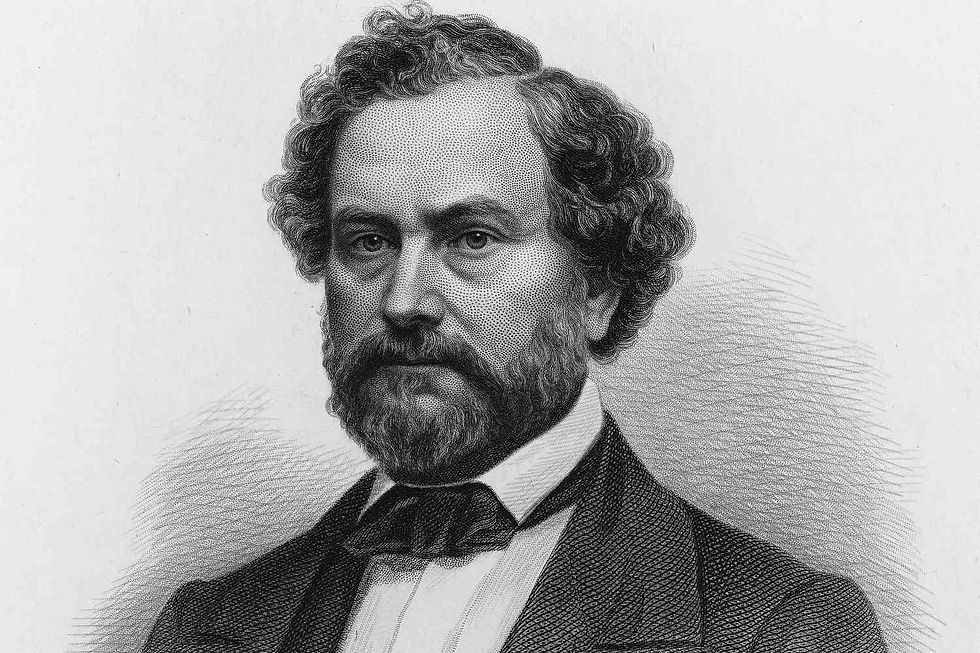
I am a Texan, and I have heard the phrase my whole life: "God created people, and Samuel Colt made them equal." Whatever your view on guns, and this article takes none, the point of the phrase is asymmetry. A 90-pound, 80-year-old woman with a revolver has at least a chance against a 250-pound, 25-year-old attacker. Without it, she has none. The tool does not make her stronger. It makes strength matter less.
AI does the same thing for law firms. Consider what the largest firms and their clients bring to a matter before anyone files a brief.
First, capital. An AmLaw 200 firm can absorb a failed pilot, a year of experimentation, and an enterprise license without anyone noticing on the balance sheet. The license alone is not small. Harvey does not publish pricing, but industry reporting puts its mid-market rate at roughly $1,000 to $2,000 per seat per month, with 25-to-50-seat minimums and 12-month commitments. At those figures, a 30-seat deployment costs between $360,000 and $720,000 a year before implementation and training.
Second, headcount. When a case produces a large document production, a large firm staffs it with teams of associates, contract reviewers, and litigation support specialists. A mid-sized firm staffs it with the lawyers it has.
Third, infrastructure. Large firms employ dedicated innovation, knowledge management, and IT departments, and they sit on decades of proprietary precedent, forms, and work product, indexed and ready to reuse.
Fourth, relationships and brand. Institutional clients hire names, and a general counsel who hires an AmLaw 20 firm is rarely second-guessed when the case goes badly.
Fifth, influence. Large firms and their largest clients have lobbying reach, bar leadership positions, and access to policymakers that smaller firms do not.
Sixth, endurance. A defendant with a large firm and a deep-pocketed client behind it can outlast a smaller opponent through attrition: more motions, more discovery, more depositions, and more expense, until the other side cannot afford to finish.
Now look at where American lawyers actually practice. The ABA counted about 1.37 million active lawyers in 2025. Among those in private practice, roughly 49% are solo practitioners, about 20% work in firms of 2 to 10 lawyers, about 12% in firms of 11 to 50, and about 19% in firms of 51 or more. The AmLaw 200 is a subset of that last slice. Roughly four out of five private-practice lawyers work in firms of 50 or fewer.

The AI adoption data already runs the wrong way. The ABA's 2024 Legal Technology Survey found that 46% of firms with 100 or more attorneys used AI, compared with 30% of firms with 10 to 49 lawyers and 18% of solo attorneys. A separate 2025 industry survey found 39% generative AI adoption at firms with 51 or more lawyers and roughly half that rate at firms with 50 or fewer. The reported pricing runs the wrong way too. The same industry reporting that puts Harvey's mid-market rate at $1,000 to $2,000 per seat says volume discounts bring the AmLaw 100 rate down to roughly $100 to $200 per seat, which means smaller firms can pay up to ten times more per seat for the same product. Treat those pricing figures with care; they are reported, not published. The direction is still unmistakable.


AI attacks the second, third, and sixth advantages directly, and it blunts the first. A model that can review a production, outline a deposition, test a claim construction position against the intrinsic record, or surface the prior art a defendant will rely on does the work of many hands. It does not give a mid-sized firm a lobbying office or an AmLaw brand. It does give that firm a real chance on the merits, which is where cases should be decided.

That is why the Astra for Law rollout is so frustrating. The firms at the front of the line already have the capital, the headcount, the infrastructure, the relationships, the influence, and the endurance. They would be fine without it. The firms that would gain the most are small and mid-sized firms, solo practitioners, and the lawyers who represent individual inventors and small companies against the largest corporations in the world. Those firms are told to wait.
I understand the business case, and I want to state it fairly. Large firms are concentrated revenue. A single AmLaw 200 enterprise contract can be worth more than hundreds of individual subscriptions, and those firms have mature security review and procurement processes that make a controlled rollout easier to manage. Zero data retention and exclusion from human review are real commitments, and it is reasonable to extend them first to firms whose governance OpenAI can verify. A staged rollout is ordinary product practice.
None of that requires firm size to be the gate. Governance can be verified firm by firm, regardless of headcount. A mid-sized firm can sign the same zero-data-retention terms and meet the same confidentiality obligations as Latham. The rules of professional conduct that govern client confidences do not change with a firm's AmLaw ranking.
Size is not a proxy for verification discipline, either. In April 2026, Sullivan & Cromwell, one of the Astra for Law co-development partners, wrote to Chief Judge Martin Glenn of the Bankruptcy Court for the Southern District of New York to apologize for an emergency motion that contained AI-hallucinated citations and misquoted authorities, which opposing counsel at Boies Schiller Flexner caught. The firm's letter said its safeguards "are designed to prevent exactly this situation." I raise the episode to make a narrow point, not to single out a fine firm. Every firm that uses AI faces the same risk, and a firm's size says nothing about whether its review process will catch a fabricated citation.
A rollout keyed to eligibility would make sense. A rollout keyed to size is a choice about who matters first.
They say the rich get richer, and this is what that looks like in legal technology. OpenAI did not create the gap between the largest firms and everyone else. On this product, however, it is widening that gap at the moment AI was closing it.
I find that disappointing, and I think it is unfair.
Firms like mine do not have to wait, however. I explain how I build my own AI tools, and why that is usually the better path for a specialized practice, in Off the Rack Does Not Fit.
Bottom line: the great equalizer only equalizes if everyone can pick it up.
V. The Clients Who Have No Firm at All: AI and Access to Justice

Everything above concerns large firms versus smaller ones. A far larger group of Americans has no firm at all.
The numbers are stark. The Legal Services Corporation's 2022 Justice Gap study, based on a nationally representative survey of about 5,000 adults conducted by NORC at the University of Chicago, found that 74% of low-income households experienced at least one civil legal problem in the prior year and 39% experienced five or more. Low-income Americans received no or inadequate legal help for 92% of the civil legal problems that substantially affected them. The figure was 94% for rural households, 91% for people in households with a disability, and 90% for households with children. Help was sought for only 25% of the problems that substantially affected them, and the legal aid system cannot absorb even that: low-income individuals brought an estimated 1.9 million problems to LSC-funded legal aid organizations in 2021, those organizations turned away roughly one request in two for lack of resources, and 1.4 million of those problems, about 71%, received no or not enough help. LSC reports that this turn-away rate has not improved since its first study in 2005. Income changes the odds but does not erase the gap: Americans at or above 400% of the federal poverty level still went without adequate help for 78% of their substantial civil legal problems, compared with 92% for those at or below 125%.

The problem is wider than poverty. Americans face more than 150 million new civil legal problems each year, and as many as 120 million go unaddressed; only about 14% of civil justice problems ever reach a court or hearing body. Stanford researchers report that in three-quarters of civil cases nationwide at least one party has no lawyer, roughly 15 million cases a year. Among low-income Americans who did not seek legal help, 46% cited financial concerns and 53% doubted they could find a lawyer they could afford. The ABA has counted just over 10,000 paid legal aid lawyers in the entire country, unevenly distributed across and within the states. For most of these people, the choice is not between a large firm and a mid-sized one. It is between representing themselves and doing nothing.

Table 4. The access-to-justice gap in numbers
Measure | Figure | Source |
Low-income households with at least one civil legal problem in the past year | 74% | Legal Services Corp. (2022) |
Low-income households with five or more such problems | 39% | Legal Services Corp. (2022) |
Substantial problems receiving no or inadequate legal help | 92% | Legal Services Corp. (2022) |
Substantial problems for which help was sought at all | 25% | Legal Services Corp. (2022) |
Problems brought to LSC-funded legal aid in 2021 / left with no or not enough help | 1.9 million / 1.4 million (71%) | Legal Services Corp. (2022) |
Americans with household income below 125% of the poverty level | About 50 million | Legal Services Corp. (2022) |
New civil legal problems Americans face each year | 150 million+ (up to 120 million unaddressed) | Am. Acad. of Arts & Sciences |
Civil justice problems that reach a court or hearing body | About 14% | Am. Acad. of Arts & Sciences |
Civil cases with at least one unrepresented party | About 75% (roughly 15 million a year) | ABA; Stanford research |
Non-seekers citing cost / doubting they could afford a lawyer | 46% / 53% | ABA |
Paid legal aid lawyers in the United States | Just over 10,000 | ABA Profile (2023) |
I want to be candid about AI's problems here, because every practicing lawyer now lives with them. Clients forward what ChatGPT told them as though it were a hornbook. Lawyers now feel the pain American doctors feel every time a new prescription drug commercial airs and patients arrive with a diagnosis and a brand name already in hand. A general-purpose chatbot produces confident legal answers that are sometimes wrong, and the person relying on it cannot tell the difference. The hallucination data bears this out. As of July 2026, a practicing lawyer was the responsible party in 653 of the 1,668 decisions in Damien Charlotin's AI Hallucination Cases database; in most of the rest, the filing came from someone else, very often a litigant without a lawyer.


That is the argument for better legal AI, not for less of it. For most of these people, a lawyer was never on the table. Acting pro se is difficult, and it often ends in failure. A tenant facing eviction, a veteran appealing a benefits denial, or a parent in a custody dispute will almost always do better with counsel. When counsel is not available, however, a pro se litigant with a tool that finds the controlling statute, the right case, and the correct deadline, grounded in an index of actual U.S. law, has a better shot than one relying on a general-purpose chatbot, and a far better shot than one with nothing. A better shot than zero still matters.
A responsible tool for self-represented litigants would look different from a lawyer's research assistant. It would ground every answer in retrieved primary law and show the source. It would know the local rules and filing deadlines of the court where the case is pending. It would say plainly when a question is beyond what it can answer reliably, and it would point the user to legal aid, a court self-help center, or a lawyer referral service when one is available. Every piece of that is buildable with the technology that exists today. The retrieval layer is the hardest part to build, and it is the part OpenAI has now built.
This is the area where I most look forward to AI getting better and better. A tool with a legal search index covering nearly all published U.S. precedential case law, and a measured improvement in research accuracy, is the kind of tool that could begin to narrow that 92% gap, particularly in the hands of legal aid organizations, court self-help centers, and pro bono programs that are overwhelmed today.
That is where the rollout hurts most. OpenAI has put the best legal AI it has built within reach of the firms with the most lawyers, and out of reach of the people with no lawyer at all. The most vulnerable people in our society could arguably use the best legal AI tools the most, and they are last in line.
Bottom line: for millions of Americans, the realistic alternative to AI-assisted legal help is no help at all, and a tool that improves on zero should reach them sooner, not last.
VI. What OpenAI Should Do Next
OpenAI got the hard part right. Astra for Law is a serious product from a company that builds frontier models, and I would like to use it. The fix is simple, and it has four parts.
First, key Trusted Access to eligibility, not size. Any firm that can meet OpenAI's governance requirements, including zero-data-retention terms, supervision of users, and confidentiality controls, should qualify, whether it has 20 lawyers or 2,000.
Second, when the API opens, open it to law firms directly, on the same terms and the same timeline as the vendors. A firm that builds its own tools should not have to buy access through Harvey or Legora.
Third, offer a path for individual lawyers and small firms, whether as a single seat, as part of ChatGPT Pro, or as an add-on for existing subscribers.
Fourth, bring legal aid organizations, court self-help centers, and pro bono programs into Trusted Access now. They serve the people with the least access to lawyers, and they already work under the supervision and confidentiality obligations OpenAI says it requires.

OpenAI did not create the advantages the largest firms enjoy, and it should not add to them. The whole promise of AI in law is that the size of the firm matters less than the quality of the lawyer, and that having no lawyer at all stops meaning having no chance at all. Samuel Colt understood the principle. I hope OpenAI does too.
The great equalizer only equalizes if everyone can pick it up.
About the Author
Erick S. Robinson is a patent litigator and helps lead on AI issues at his firm. He writes and hosts a podcast on patent enforcement, litigation funding, and the use of frontier AI models in specialized legal practice, and he builds his own practice tools. He is on LinkedIn at https://www.linkedin.com/in/erickrobinson/.
Sources
Erick S. Robinson, Off the Rack Does Not Fit, AI Law Blog (2026)
OpenAI Help Center, Astra for Law (last visited Sept. 25, 2026)
Legal Servs. Corp., The Justice Gap: The Unmet Civil Legal Needs of Low-income Americans (2022)
OpenAI Astra for Law: Legal AI Launch Explained, NeoTeo (Sept. 2026)
The Legal Industry Report 2025, Law Technology Today (ABA Law Practice Division 2025)
Legal Servs. Corp., The Justice Gap Report (last visited Sept. 25, 2026)
Am. Acad. of Arts & Scis., Reintroducing the Civil Justice Gap, in Achieving Civil Justice
1,600+ AI Hallucination Cases: What Every Law Firm Should Learn, LegalAI Space (July 2, 2026)


Comments